This Whole England-America Special Relationship Really is a Thing

We’ve heard a great deal lately about a special relationship between the United States and England.

At first I thought it was because of the whole 1776 revolution incident. Also, sharing a language, well sometimes anyway. I must admit I’m forced to use the captions when watching certain British shows. And I watch a lot of those.

Recently however I’ve noticed something becoming more and more evident.

There is actually very little daylight between British and American culture.

It’s uncanny the similarities we share. I’ve noticed constant references to American films, television and celebrities on numerous UK shows.

Even older ones that Americans might find obscure show up constantly on BBC shows.

The other day someone referenced Humphrey Bogart and the African Queen, The Lone Ranger and sang Greased Lightnin on British programs.

This is especially the case on comedies that when seeking humorous punchlines resort to Americanisms for laughs.

At first, I was surprised to hear these continuous allusions to stars and places Americana until it became obvious.

We do share a language and a culture in too many ways to avoid intertwining.

Art design and entertainment is way too deeply embedded now to ever be removed.

The familiar shows, celebs and movies pop up easily and are highly recognizable on both sides of the Atlantic.

I’m not certain when it happened or why, but it has. I mean what city doesn’t have street names from England. Hello! New York, New England, Kensington, Cornwall, Queens?

I imagine because we shared a language and both began as Christian countries it was inevitable we’d bond over similar lifestyles.

And speaking of Bond, what American didn’t know and adore Sean Connery?

Who hasn’t read Pride and Prejudice or Shakespeare?

Yet is it just England or is it also the entire Western World that formed a bond that is now coming a bit unraveled at the edges?

Yes, of course we all are familiar with European culture, but far less with other countries.

On occasion we’d watch a German movie with subtitles. Or Spanish or French flick.

France and Italy were a close second to England  in familiarity possessing an enormous desire to travel there for the food and sights.

And let us not forget Bridget Bardot, Maurice Chevalier, Coco Chanel and Louis Jordan.

Italy won our hearts with pasta, leaning towers, gorgeous landscapes and Sophia Loren, Marcello Mastriani and the Godfather.

But there is still something incredibly familiar about England. It’s as though we were always one country with a giant ocean in between. Flying to London on business or for vacation never seemed too difficult. Like going to a relative’s for a weekend stay.

We shared fashion, Carnaby Street, Twiggy in the sixties. Music, Princess Diana, the Beatles and all the other groups in the British Invasion. So many Brits embraced Hollywood as a second home and lived here part or full time. So many British recording artists cite singers like Elvis and Little Richard as their inspiration.

Great American movies like Star Wars were filmed at Pinewood Studios in England and so many crossover stars populated these films.

It almost became difficult to discern who was British or American in show business any longer. Still isn’t.

I must admit in the food department Americans were pretty much okay with Brits keeping their fare to themselves.

While we embraced burgers, pizza and Asian delights, it wasn’t until quite recently British food became a thing and their chefs accepted as culinary elite.

Let’s face it when was the last time you went to a restaurant here that featured spotted dick or blood sausage on the menu? UGH!

But we Americans were more than happy to buy into the rest. English furniture and antiques were held in the highest esteem by the wealthy classes in the States.

British décor complete with dark rich paneling was prominent in the most prestigious homes, exclusive private clubs and public buildings.

And in the fifties when MGM boasted it had more stars than the heavens a great deal of them were English.

Most Americans liked Queen Elizabeth and have a favorable view of the Royal family. Okay many of its members anyway.

We even chose to believe we had our own royal family for a time and its theme was even Camelot.

Kennedy’s death destroyed that dream in a hurry, but the pride we felt in that First Family remains with all of us who lived during those times. It was then we could understand the British pride in their royals.

I remember playing with paper dolls as a kid with gowns from Queen Elizabeth’s coronation.

Although many won’t admit it, we all loved the pomp and circumstance of royal weddings and otherworldly jewels and crowns.

Yes, we’d separated, but it was more like a family that goes through a divorce, but continues to vacation together at the family beach house each summer.

The connection is never really broken.

No other country in the western world has had a closer relationship, shared so much culture or moved so easily through one another’s world.

Politics aside, Britain’s choice of leaders as will ours, won’t impede on what has already become such a deep and abiding interaction between the people of the US and UK.

Perhaps yes, I’m being too optimistic here. As the culture of England and America changes the similarities may subside.

If that is the case, it would be a great shame. Thank goodness we’ll always have Monty Python, Ab Fab, Downton Abbey, Nigella Lawson, Harry Potter and Bond movies to fall back on when we need a British fix

And the Brits will always have Hollywood, Texas Barbeque, Black Friday sales, Halloween, Levis and McDonald’s.

We’ll continue to share it all just as surely as Bogie and Bergman will always have Paris.
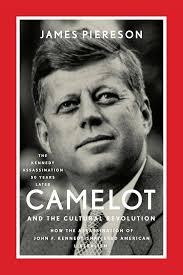
JFK Jr. Devil or Angel? Baby Boomers Really Don’t Care

The television movie about JFK Jr. and his wife Carolyn Bessette’s death seems to be creating a litany of criticism or support from various factions. I’ve given this some thought and it’s an interesting dynamic at work, but why?

Getting older means although the mind may be slowing a little, memories seem more vivid. I’m not certain whether that’s because it doesn’t seem as long ago anymore, or the feelings we felt when we were young come rushing back more quickly now.

Even simple things like a favorite pizza conjure up the sensibility of being with friends and loving that particular food.

Strangely, I never seem to be able to recapture the taste of the foods from my youth, only the impressions. So why should a TV movie have so much to do with childhood feelings?

John F. Kennedy Jr.’s death seemed to resonate differently according to your generation. To some an ending, to some nothing.

I’ve noticed young people don’t regard the Kennedy name with the same reverence as Baby Boomers.

Listening to the way John John is being described, I’ve taken the time to try and discover why.

It’s clear that despite the fact President John F. Kennedy was not by any means a saint, Baby Boomers still embrace his memory. Why?

I can only speak for myself, but my recollections of the first three years of the 1960s are still very vivid and emotionally charged.

This is in great part due to the fact JFK’s death was one of those once in a lifetime

experiences you seem to carry with you forever.

That week was burned in my soul and changed not only the world, but me. I’m certain I’m not the only one who feels that way.

The question, “Where were you when JFK was shot?” comes up on most first dates for Baby Boomers. Perhaps silly, but true because it unites us in a special way, a shared moment in time that forms a bond. Instant recall of a moment that lives on inside us.

For those too young to know I will describe America on November 22, 1963.

We were shocked and filled with a painful and overwhelming sadness. As though we’d fallen into a bottomless black hole that encased our entire body and soul.  

Like robots programmed to sit, watch and sob. Tears fell without any inducement at the sights and sounds we witnessed, as one shocking and devastating moment continued to emerge from our television sets.

Life stopped and we sat glued to the screen incapable of movement or joy.

When Lee Harvey Oswald was murdered in front of our eyes in real time, we fell deeper down a shock spiral uncertain of whether awake or dreaming. Time stopped, we sat.

The pain seemed to hover in the air above our homes, neighborhoods and cities like a dark cloud of despair.

Memories come flooding back today as glimpses into a past we’ve carried with us a lifetime.

Jackie’s blood-soaked pink suit, a convertible speeding through the streets as she climbed on the trunk, her face when Lyndon Johnson took the oath of office on the plane.

The sound of horses’ hoofs clopping along down Pennsylvania avenue pulling a military ammunition wagon with a flag-draped coffin. Then probably one of the most heart wrenching moments of our entire generation, John John saluting as the casket passed. A Dallas police station and another shocking murder.

The day JFK was killed conjures up more than just tragedy, it evokes the sentiments of a time in America that died with JFK and can never be reborn.

That child saluting his martyred father is something none of us could ever forget. More than just a young boy’s goodbye to a parent.

JFK’s death also marks the day when the guns came out in America and never left. The turning point for a nation that changed into a violent gun-toting jungle that continues its non-stop steady fall into chaos.

A day that marked the end of post-war America, and ushered in a new era filled with anger, mistrust and violence.

Gone was the sense of optimism that prevailed when the WWII soldiers came home and the building of a country began. Those upbeat feelings of hope and excitement for the future were replaced. Sadly, to be ever marked by assassination, blood and shock after shock as we witnessed the fall from that heady pedestal we occupied.

It was a strange new America. One fraught with protests, marches, anger, hatred, guns and more guns as we struggled to find a way out of the incredible pain to which we’d awakened on November 22nd.

Life went on of course, but in a new land, one without a young inspiring leader. JFK embodied the very soul of youth and hope for a future filled with the promise of a post war era.

Now violence set the tone, there were new streets filled with crime, protests and hostility.

Did America turn into something different overnight? No, of course not. It was a gradual metamorphosis, subtle and slow. Metastasizing to pockets and places in a society that never imagined this darkness ever existed.

That is why when Jackie Kennedy’s reference to Camelot was introduced it became the theme song of a generation. Before it all changed. Before the America Baby Boomers knew morphed into a strange and unfamiliar place lacking adolescent innocence.

Stumbling along without that vibrant, handsome leader and his beautiful family to inspire us to greatness. To be better versions of ourselves, and to “ask not what our country could do for us, but what we could do for our country.”

Is it any wonder we miss him, flaws and all?

Is it so strange that when we see John John we witness a missed opportunity to restore the America we loved, but can never return?  

Were the Kennedy’s perfect people? No, not at all. Did we know that then? No, we didn’t. Would most Baby Boomers say they are happy we found out how imperfect they were? I doubt it. I’d prefer living with my memories of a simpler time, a hopeful one, in a far different America. As we age into a world we no longer understand or recognize do we need those memories of happier times? Indeed.  

Am I ignoring the darker underpinnings of America then? Of course, but my memories are subjective, albeit not always realistic.

I often wonder what this country would be today had Kennedy lived to continue his stewardship and positive march forward into his U.S.A. If guns and violence hadn’t been given an open invitation to entrench their evil into the fabric of that quiet, lovely country that felt undemanding, safe and optimistic.

One that inspired all of us and the entire world.  

To me when someone criticizes JFK Jr. it’s as if each word knocks another jewel off a resplendent Faberge egg. Until it becomes a hollow shell lacking the luster and beauty by which it once dazzled.

Are we merely waxing nostalgic when Baby Boomers choose to hang onto the gleaming perfection of a place where we once lived and thrived?

I wish today’s generations could understand and experience even a small part of our America, our illusion, our Camelot.